Economy · Analysis
What a 50-year mortgage saves each month on $400,000
On a $400,000 balance, extending a mortgage by 20 years cuts the payment by 12%. The balance still owed after ten years explains the trade-off.
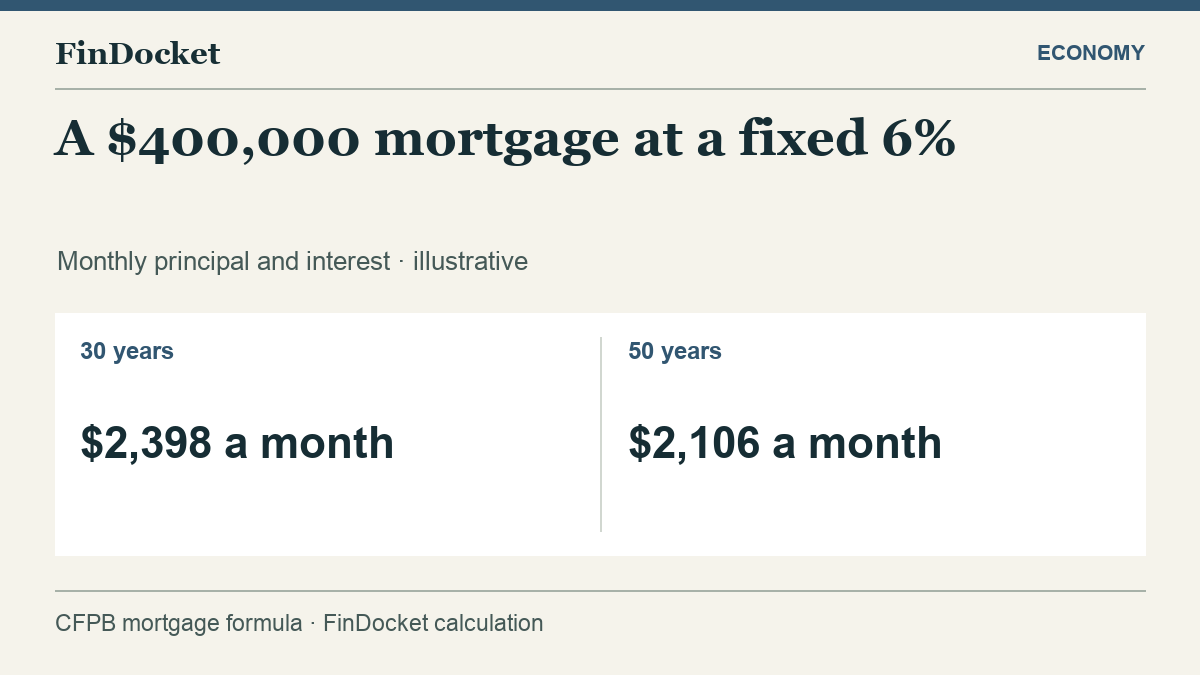
A homeowner borrowing $400,000 at a fixed 6% would save about $293 a month by stretching repayment from 30 to 50 years. The term grows by two-thirds. The required monthly payment falls by only 12%. The interest due in the first month explains much of that difference.
At 6%, one month’s interest on $400,000 is $2,000. Both loans start there. A level monthly payment of about $2,398 retires the debt in 360 installments. A payment of about $2,106 retires it in 600. Extending the term reduces the principal the borrower has to repay each month. It leaves the first month’s interest charge intact.
The cost depends on when the borrower exits
Paid exactly as scheduled, the shorter loan incurs about $463,353 in interest. The longer one incurs about $863,372. The extra $400,019 assumes the borrower keeps the loan for its full term, makes every scheduled payment and never refinances. Someone planning to move in ten years needs a different comparison. At that date the outstanding balances would be about $334,743 and $382,691. The longer loan would require roughly $47,948 more from the eventual sale proceeds to pay off the lender.
These figures isolate the term by holding the interest rate constant. They exclude property taxes, insurance, fees and changes in the home’s value. For an actual offer, substitute the two quoted rates and the likely sale date. A lower required payment can ease a real budget constraint even when it leaves a larger debt at closing.