Economy · Analysis
What a $5 trillion affordability proposal costs in a single year
Restored benefits and forgone tariff revenue enter the federal budget on different lines. The baseline and phase-in determine the annual cost.
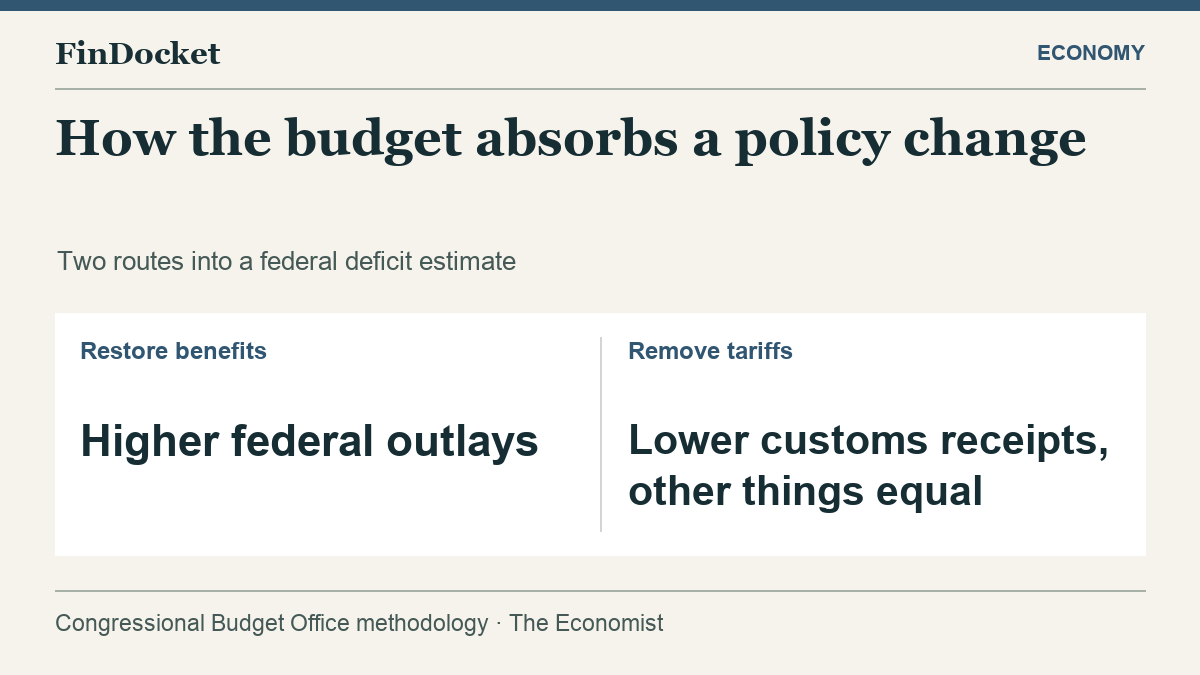
A proposal to restore benefits, extend subsidies and unwind tariffs can produce a single enormous headline number. The components reach the federal budget through different doors. More benefit payments raise outlays. Forgone tariff collections reduce receipts. Both can raise the deficit relative to a baseline, even though only one involves a larger check leaving Treasury.
The Economist discussed a cost approaching $5 trillion for a group of affordability policies. Treat that as the publication’s scenario. If a $5 trillion estimate covers ten fiscal years, it averages $500 billion a year. A family cannot infer its benefit from that division and a budget director cannot use it as the first year's appropriation. A phase-in or a benefit beginning late in a fiscal year could put much of the spending near the end of the window.
The Congressional Budget Office describes its baseline as a benchmark for comparing proposed changes under specified assumptions. The choice is consequential. Extending a benefit that expires under current law entails a cost relative to expiration even if an eligible household sees the same monthly benefit next January.
Three items make an estimate comparable with alternatives. Identify the starting law, reproduce the annual schedule, and separate the spending and revenue effects. Then examine interest costs and behavioral assumptions if included. That exercise tells readers when financing is required and who could see a change on a bill or in a bank account.