Business · Analysis
Which records answer the Flock contract question?
Contracts establish who paid for a service. Customer permissions and records of actual use provide the evidence for a different question.
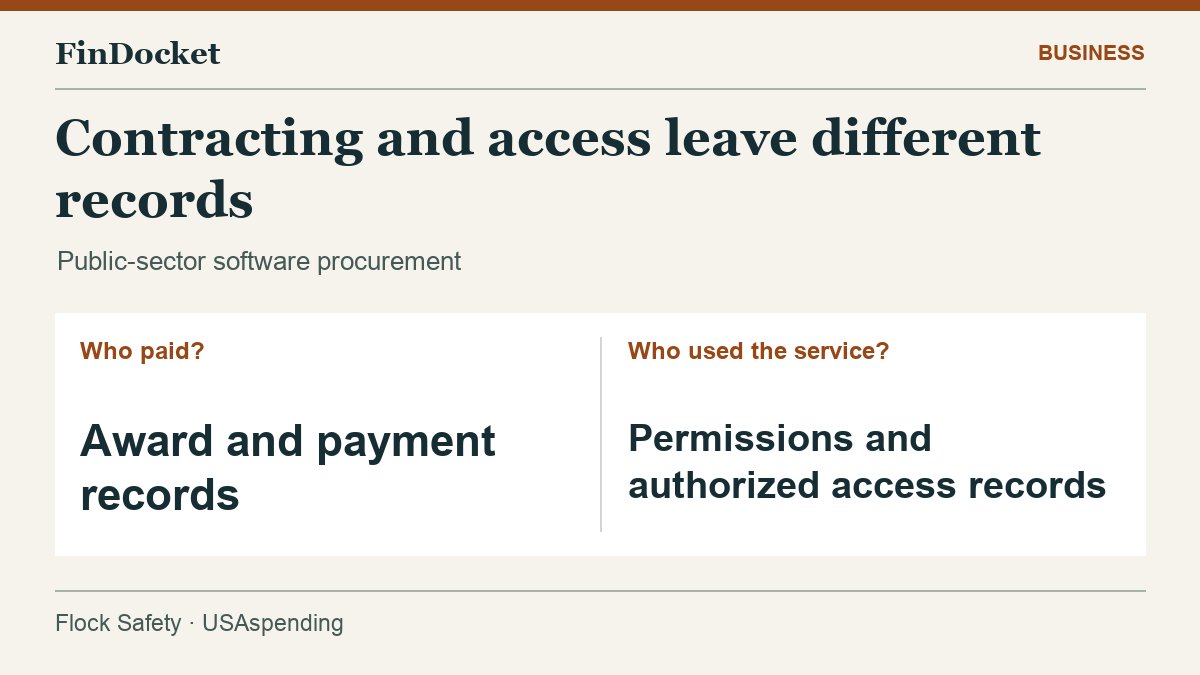
When Flock’s co-founder said the company had no contract with ICE, she made a claim about a commercial relationship. The discussion also raised a separate question about how customers may share information. Checking one claim with records designed for the other can produce a confident answer to the wrong question.
In a direct procurement, one organization awards a contract to a named recipient. Public spending records can identify the awarding agency, recipient, obligations and period of performance. USAspending explains the difference between prime awards and subawards. Searches also depend on names and identifiers, reporting coverage and the interval examined. A payment by a local government belongs in that government's records and may never appear as a direct federal award.
For access, Flock's trust materials describe the company's view of customer permissions and agency control. A vendor's published policy is evidence about its stated rules. A customer's signed agreement, adopted policy and authorized audit of actual use can establish different facts about that customer's conduct during a defined period.
Imagine one city buys a service for $100,000 and permits another public agency to use part of it at no charge. There would be one vendor payment even though two organizations had some use of the service. This hypothetical illustrates why a sound account identifies the payer, the rights granted and the evidence of actual access separately.