Business · Analysis
When a failed business investment becomes a personal debt
A founder's equity investment and personal loan guaranty expose different assets to loss. SBA lending documents show where the second risk begins.
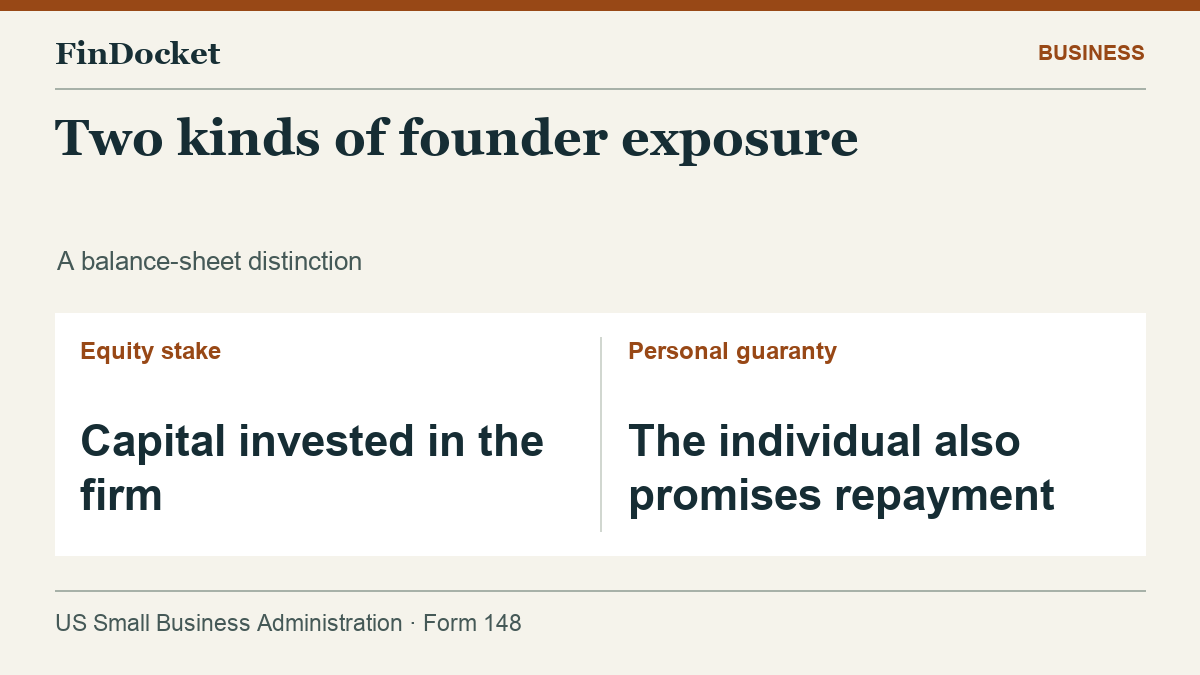
A founder investing $250,000 in a business faces a different contractual risk from a founder guaranteeing its borrowing. In the first case the cash has already changed hands. If the shares become worthless, the investor can lose the contribution. A personal guaranty creates a separate promise to a lender. It can remain relevant after the company has run out of money.
The US Small Business Administration gives a practical illustration. Its description of Form 148 states that individuals owning 20% or more of a small-business applicant must supply an unlimited personal guaranty. That rule belongs to the relevant SBA lending arrangement. It does not attach automatically to every entrepreneur who accepts equity investment.
Follow the signatures
Suppose a business has outside equity and a separately guaranteed bank loan. A failure can destroy the outside shareholders’ investment while leaving a lender with a claim under the founder’s guaranty. Conversely, a founder who financed the business entirely with personal savings has no loan balance arising solely from that contribution. Whether a particular home, account or other asset is exposed depends on the actual agreements, security interests and applicable law.
A venture financing also has its own negotiated rights. The NVCA’s model documents separate the stock purchase, charter and investor rights agreements. To assess downside, ask who contributed equity, who borrowed, what collateral was pledged and who guaranteed repayment. The headline amount raised answers none of those questions alone.