Economy · Analysis
Why Iraq can flare gas and still depend on imported fuel
Iraq's gas flaring and fuel imports can coexist when domestic gas lacks the infrastructure needed to reach power generators.
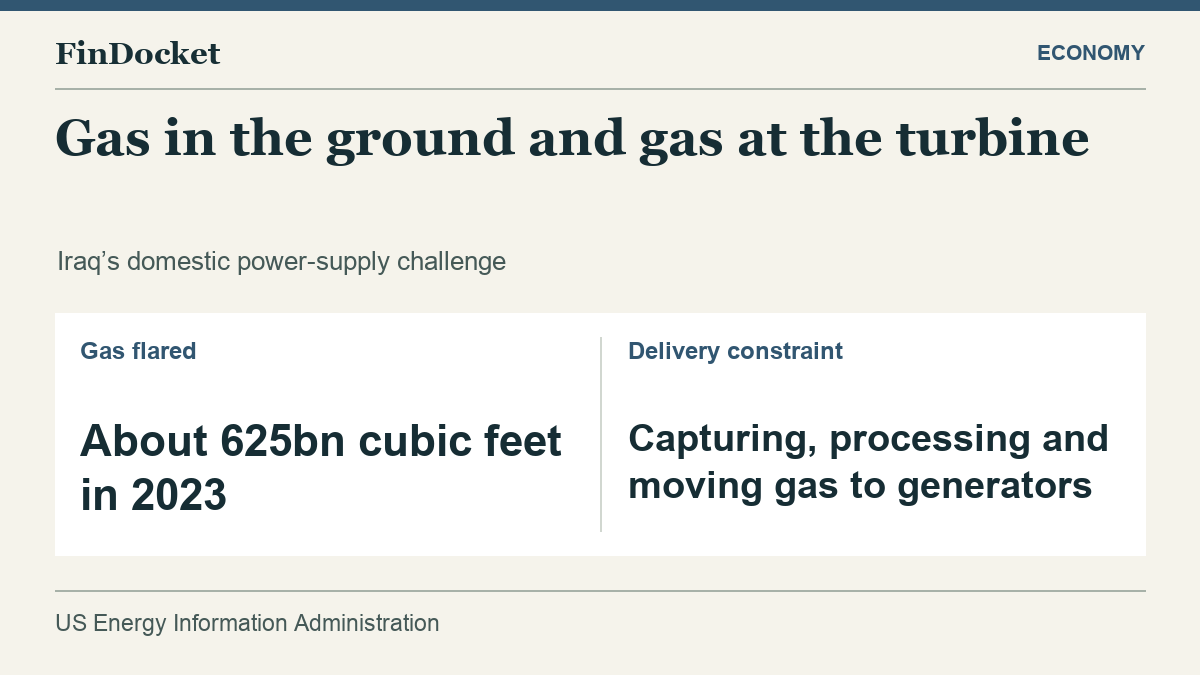
A country can have substantial gas reserves and still need an external supplier to keep power stations running. Iraq demonstrates the difference between ownership of a resource and delivery of a fuel. The US Energy Information Administration put Iraq’s proved gas reserves at 131 trillion cubic feet in 2023. It also cited World Bank estimates that Iraq flared about 625 billion cubic feet that year.
Much of the gas comes out of the ground alongside crude oil. To sell it to a power station requires gathering lines, processing and a route to the customer. The EIA identifies insufficient pipelines and other midstream facilities as reasons associated gas is flared. The existence of a large resource cannot remove those missing links on the date that a cross-border fuel shipment is delayed.
What substitution would require
Dividing 625 billion cubic feet by 365 gives about 1.7 billion cubic feet a day as an annual average. That calculation illustrates the scale of the gas burned. It is an upper-bound physical comparison, not an estimate of fuel immediately available to a particular plant. Volumes, location, gas quality and the timing of investment all matter.
For cross-border trade negotiations, follow the capacity of connected processing plants, their actual throughput and the pipelines serving generators. A project announcement may improve Iraq’s eventual bargaining position. A newly operating domestic delivery route can change how much imported gas the power sector actually needs to buy.