Business · Analysis
Where to find ticket sales in the Kennedy Center’s finances
Paid occupancy, realized ticket prices and performance counts explain what an arts organization’s total revenue can conceal.
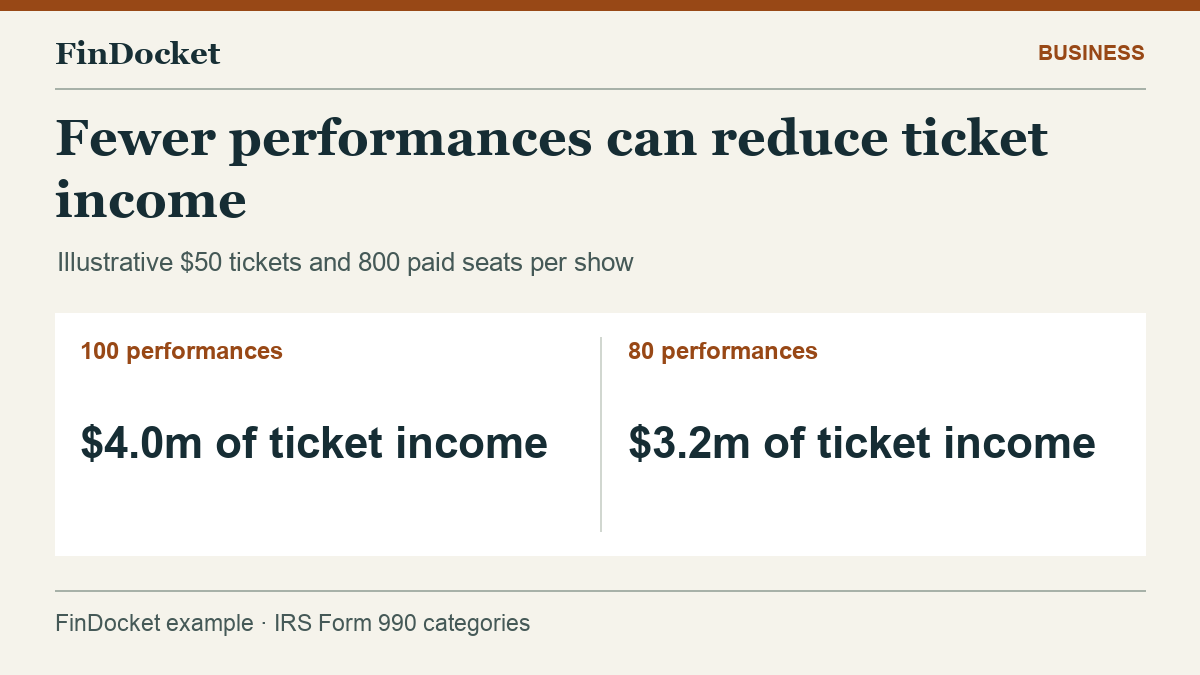
An arts institution can sell fewer tickets and report more revenue. The apparent contradiction arises because a performance, a donation and a restricted grant can all bring resources into the organization while serving different purposes. A debate about the Kennedy Center's audiences needs a narrower measure than the top line of its tax return.
The Center's public IRS filings distinguish contributions and grants from program service revenue. The underlying schedules and notes matter. A federal appropriation for operating and maintaining a building can be substantial, yet it says little about how many people paid for an orchestra seat. Even program service revenue may include more than tickets. Readers should identify the precise category and fiscal period before using it to support a claim about audience behavior.
Imagine a season with 100 performances, 800 paid seats per performance and an average net ticket price of $50. That produces $4 million. Cancel 20 shows and the remaining 80 could still sell exactly as well while total ticket income falls to $3.2 million. Conversely, discounted tickets could keep attendance high while revenue per seat drops.
A useful before-and-after comparison would show available performances, sellable seats, paid occupancy, complimentary admissions and realized ticket price. Donation and appropriation trends belong alongside those data. That comparison can distinguish fewer opportunities to attend from a change in what audiences chose to buy.