Economy · Analysis
How to tell whether India’s NAVYA expansion creates paid work
Wider access to NAVYA 2.0 expands the pool of trainees. Placement and retention data would show how many participants actually find paid work.
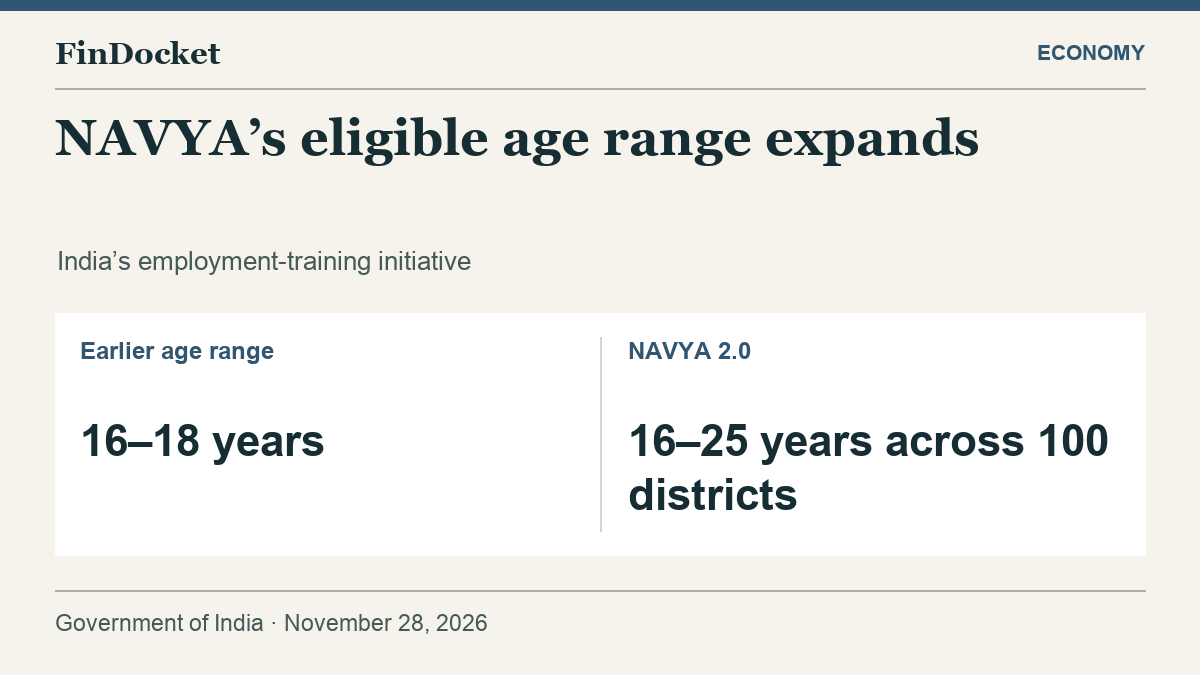
India’s NAVYA 2.0 changes the economic question facing its evaluators. The training initiative previously targeted girls aged 16 to 18. The expanded program covers ages 16 to 25 across 100 districts in 24 states and union territories. A higher job-placement rate after expansion could reflect better training, an older intake more ready to enter employment, or both.
The government says its Skill India Digital Hub will track learners from enrollment to certification. The pilot included roles such as solar photovoltaic installation helper. The expanded program offers pathways into employment, apprenticeships and entrepreneurship. Each is a plausible route to income, but the three have different evidence requirements. A certificate documents completion. A payroll entry documents a paid job. An enterprise registration alone says little about whether customers are buying.
Use the same denominator twice
Imagine a district enrolls 100 participants, certifies 80 and places 40 in paid work. It can report a 50% placement rate among those certified and a 40% rate among those enrolled. Both numbers are correct. Publishing both reveals what happened to participants who dropped out before certification.
A meaningful comparison with the pilot would also separate the original age group from newly eligible participants, distinguish paid apprenticeships from permanent jobs, and revisit earnings after several months. That would show whether employers actually value the skills, and where transport, scheduling or local job availability still interrupt the path from classroom to paycheck.