Business · Analysis
Why New Mexico’s 99% small-business figure answers only half the question
A firm counts once in a business census no matter how many people it employs. That distinction changes the story about small employers.
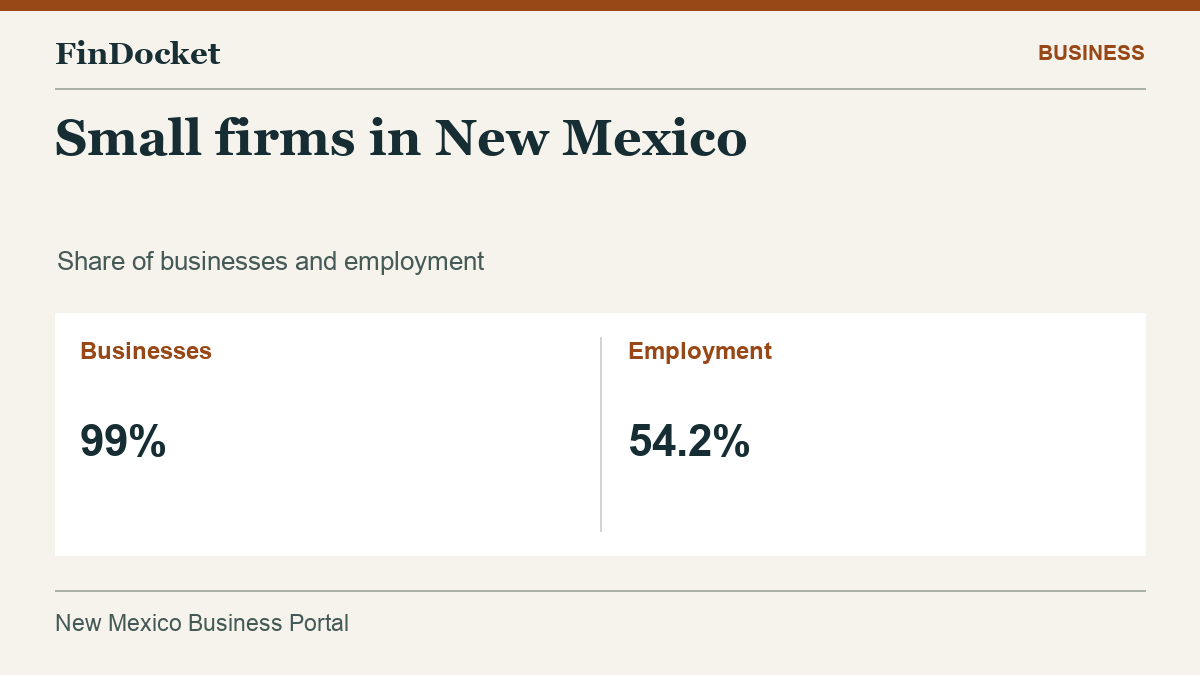
Small businesses can account for almost every business in a state while employing a much smaller share of its workforce. New Mexico’s business portal illustrates the point. It cites a 99% small-business share and a 54.2% employment share. A business and a job are different units of observation.
Imagine lining up firms by size and giving each a single vote. A neighborhood shop and a national employer’s business count the same way within the applicable business population. Now count employees instead. An enterprise with hundreds of workers contributes hundreds of observations. Self-employed businesses complicate the comparison further because a business can operate without having any paid employees. The SBA’s state profiles distinguish employer and nonemployer data.
Which number belongs in a local spending story?
For a story about how many owners face a compliance deadline, a count of affected enterprises makes sense. For a wage change, the first question is how many employees fall into the affected group. For Small Business Saturday, neither share tells us how much the typical retailer took in that day. That requires receipts from businesses in the relevant retail categories, over a consistent period.
The distinction matters to policy, too. Granting the same amount to each eligible firm and subsidizing each eligible employee allocate money very differently. Before applying the widely repeated 99% figure, identify the unit the policy pays or the transaction the article is trying to explain.