Economy · Analysis
Why the meter can understate the cost of electricity in Nigeria
Adding backup power to the grid bill reveals the effective cost of electricity. Hours without service explain what the receipts leave out.
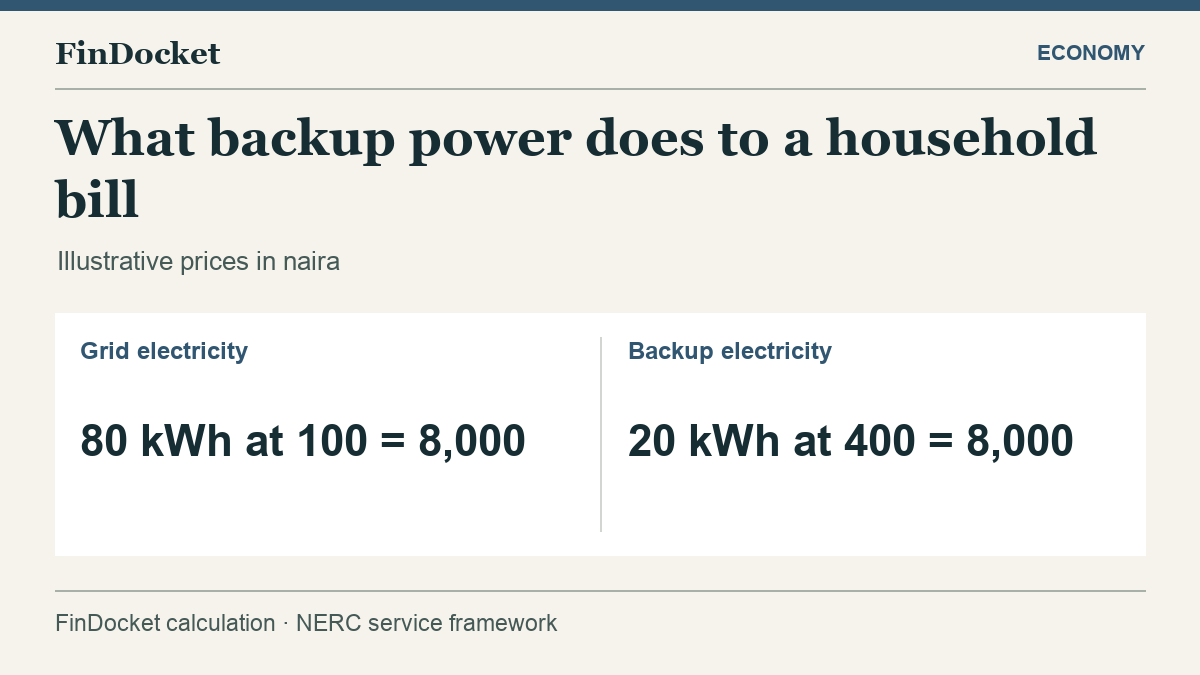
For a household trying to keep a room cool in Nigeria, a low meter reading can be a sign of an expensive month. The local distribution network may simply have delivered fewer hours of electricity. If a family bought fuel to fill the gap, some of its power bill is on a different receipt.
Consider a purely illustrative household using 80 kilowatt-hours of grid electricity at 100 naira each and 20 kilowatt-hours of backup electricity at 400 naira each. The grid portion costs 8,000 naira and the backup portion costs another 8,000. The family has paid 16,000 for 100 kilowatt-hours, or 160 naira per unit. Backup supplied one fifth of the electricity and accounted for half of this bill. These prices are examples, not current Nigerian tariff quotes.
Nigeria's electricity regulator distinguishes tariff bands by service level. Band A is associated with a minimum of 20 hours of supply a day. A tariff classification is still different from a household's measured hours at home. A particular outage can occur during the most valuable part of the day for cooling or business activity.
The best household comparison uses meter units, actual fuel purchases, generator maintenance and a record of outage hours over the same month. If a family forgoes cooling entirely, the cash expense can fall even as living conditions worsen. For that reason, cash spent and hours of service belong side by side.