Business · Analysis
What a 30% office-chair discount actually saves
A chair’s usual selling price, configuration and delivery costs reveal how much a 30% promotion actually saves a buyer.
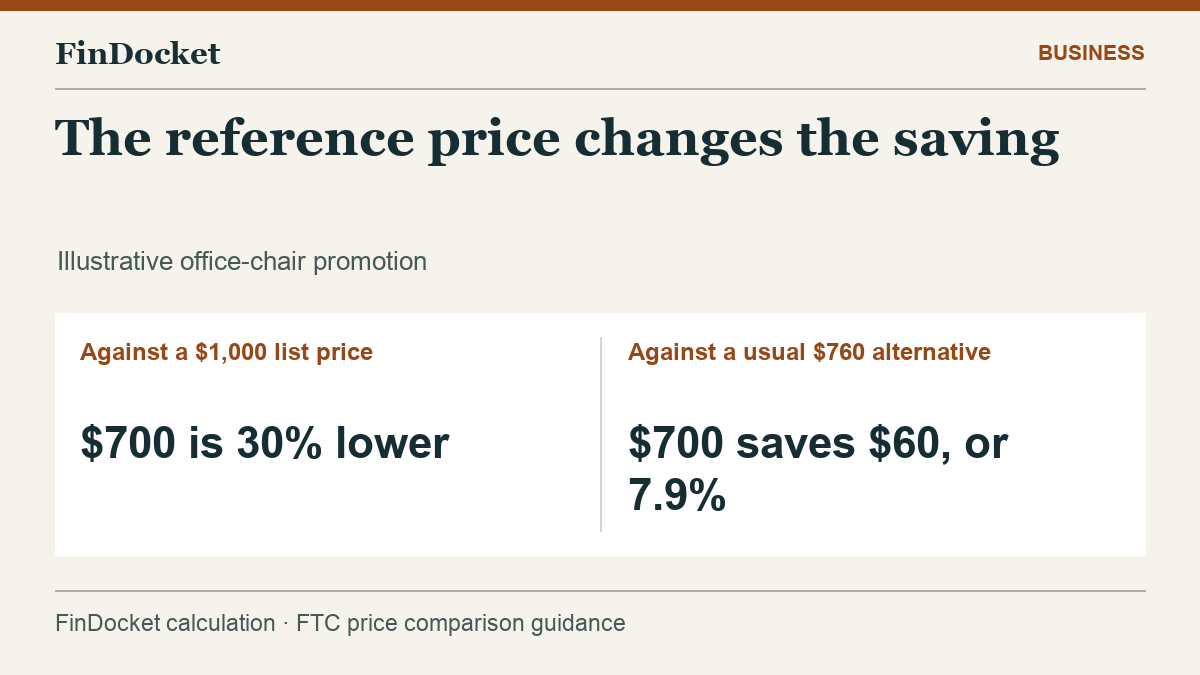
A percentage discount answers just one question about a chair. It tells you how today's advertised price compares with the reference price chosen for the promotion. To calculate the saving available to a buyer, the relevant comparison is the price of the same chair they could otherwise buy.
Take an illustrative $1,000 list price and a $700 sale. The advertised discount is 30%. Suppose that exact configuration typically sells for $760. Buying during the sale saves $60 against the usual alternative, or about 7.9%. If one seller charges $50 for return shipping while another offers a local trial and collection, even that calculation may overstate the value to someone unsure about the fit.
The US Federal Trade Commission's guides on former-price comparisons discuss whether a former price was a genuine price at which the item was offered in the ordinary course of business. A list-price comparison and a comparison with a retailer's own former price make different claims. The guide does not establish anything improper about the chair promotion under discussion.
A buyer can settle the personal decision without resolving a legal question. Match the model, armrests, fabric, size, condition and warranty against another current quote. Add delivery charges and any unavoidable fees. That yields a cash saving that survives checkout and reflects the particular chair the buyer intends to use.