Economy · Analysis
Why Peru’s El Niño damage bill differs from its growth forecast
The cost of replacing damaged assets and the income lost during disruption measure different consequences of flooding.
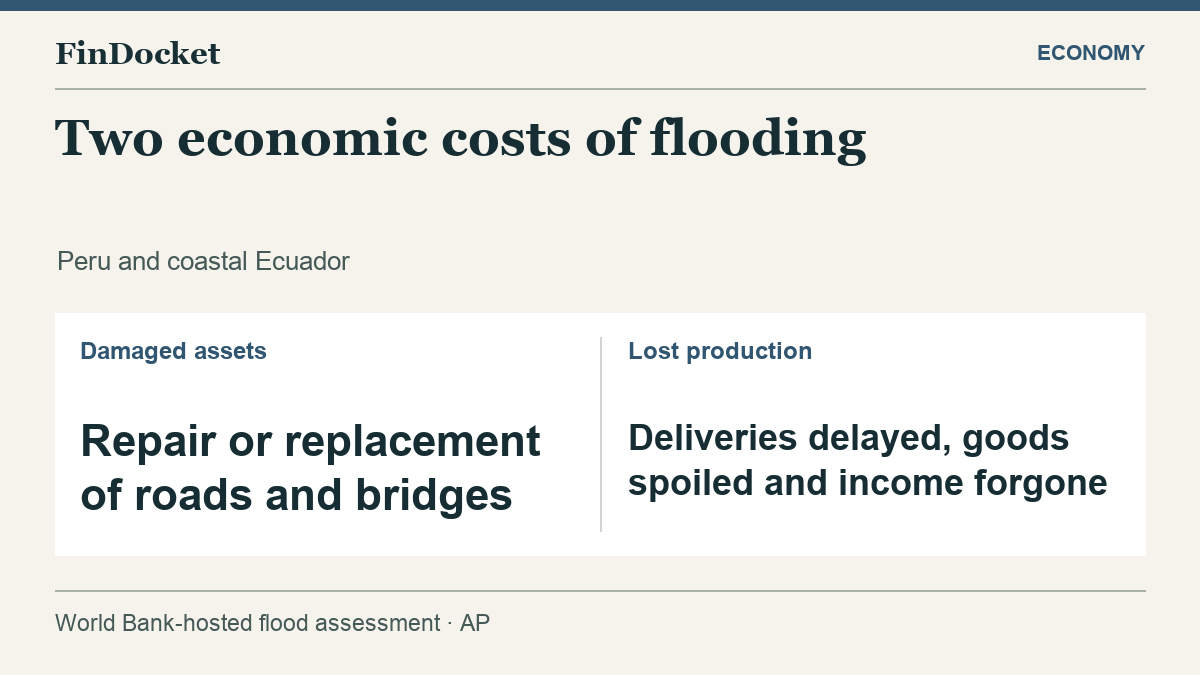
When floods close a road, two economic losses start ticking at different speeds. The road itself needs repair. Goods that would have crossed it can spoil, reach a customer late or be transported along a more expensive route. An estimate of physical damage and a forecast of lost economic growth therefore answer different questions.
A World Bank-hosted case study puts estimated damage from Peru's 2017 coastal El Niño at about $3.1 billion and lists damage to roads, bridges, houses, farms and other facilities. That historical episode gives a sense of the range of assets exposed. Using its total as a forecast for the current flooding in Peru and Ecuador would require information about the present footprint, road closures, changes in development and protection built since 2017.
Take a bridge costing $10 million to replace. A weeklong closure might disrupt the sale of $2 million worth of produce. Some of that produce could be sold later or elsewhere. Others' gross sales also include costs that should be deducted when measuring lost value added. Adding the full sales figure to the repair estimate and calling the sum a GDP decline would confuse several different concepts.
A useful update would track the duration of closures, freight prices, volumes reaching wholesale markets and spending on repairs. Those observations tell a reader when a disaster that begins with damaged assets starts to reduce income, and for whom.