Business · Analysis
Why Atlanta’s release of Tagovailoa leaves Miami’s cap charges in place
Payments and cap charges from a former club can survive a player's release by a new team. Miami and Atlanta illustrate the timing difference.
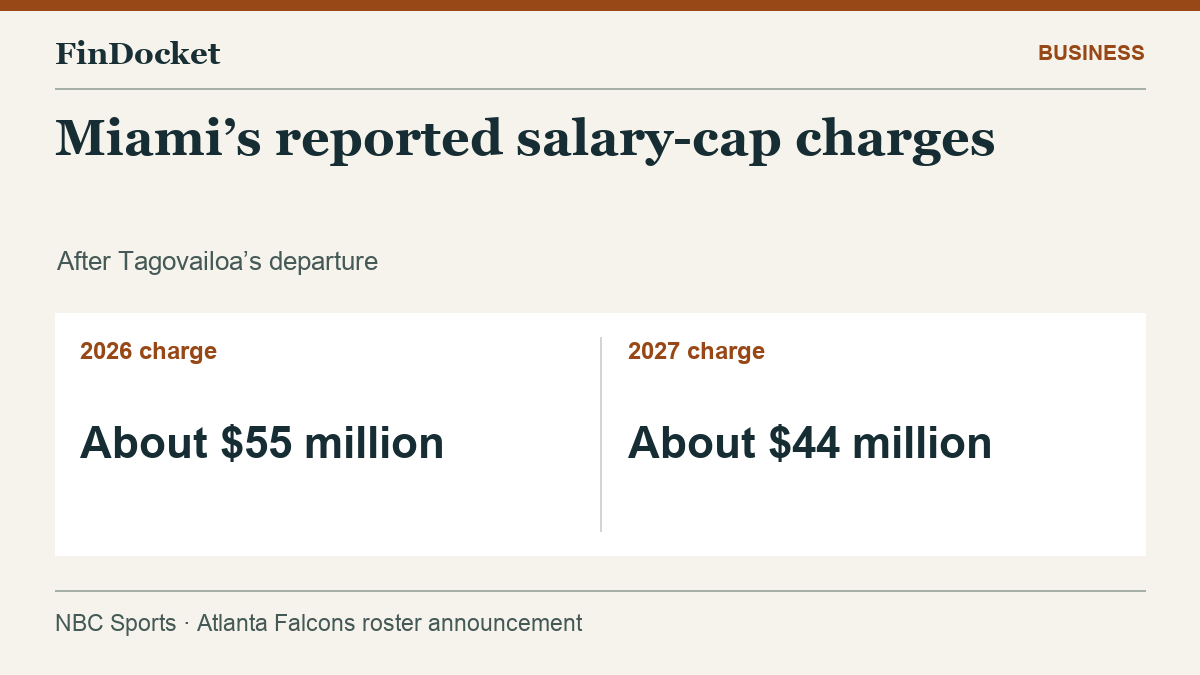
Atlanta’s decision to release Tua Tagovailoa changes who can put the quarterback on the field. Miami’s earlier contract with him still has a financial life of its own. A player leaving a second team cannot reverse compensation already committed or the salary-cap accounting attached to his first team’s contract.
When Miami released him in March, NBC Sports reported that the Dolphins had exercised an option bonus first. On the figures reported at the time, that lowered Miami’s 2026 dead-money charge from approximately $67.4 million to $55.2 million and raised the 2027 figure from about $31.8 million to $43.8 million. The estimates are rounded. The economically important feature is that roughly $12 million of charge shifted between seasons. The underlying burden largely survived.
What does a fan mean by paying a player?
There are at least three different questions. Which club employs the player this week? Which party owes cash under signed guarantees? Which team carries a charge against its salary cap in a given league year? The answers can differ even when everyone agrees on the headline contract value.
Atlanta’s release announcement establishes the roster transaction. Miami’s prior release and bonus treatment explain its cap schedule. Calculating the final cash each team pays would require the applicable contracts and any offset terms. Counting Miami’s two cap charges as a fresh bill created by Atlanta in November would attribute the cost to the wrong decision.