Business · Analysis
How much of a tariff can a small business pass to its customers?
A New York Fed survey reveals how firms split a tariff bill between higher prices for customers and lower margins for owners.
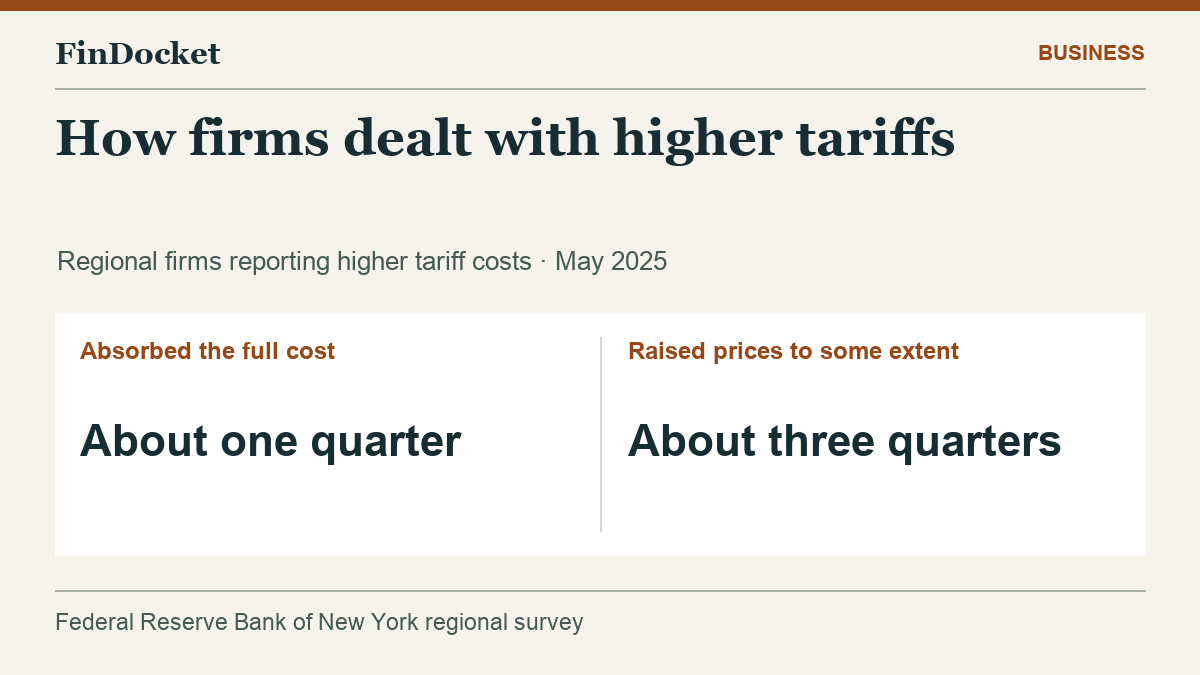
An importer pays at the border. Who bears the cost after that depends partly on whether the business can raise its selling price. The New York Fed’s May 2025 regional business surveys give a concrete example. Around three-quarters of responding manufacturers and service firms facing tariff-related cost increases said they passed along at least some of the increase. Roughly a quarter absorbed the whole increase.
The difference can be substantial for a shop with thin margins. Consider an item that sells for $50 and costs its retailer $40. If its landed cost rises by $4 and its shelf price stays put, gross profit falls from $10 to $6 per sale. That is a 40% decline in gross profit dollars on the item before overhead. A $2 price increase would instead divide the burden between the retailer and its customers, assuming sales volume held steady.
What evidence belongs in a local claim?
The New York Fed’s survey covers its region. Its percentages cannot establish the experience of Illinois firms specifically. Local evidence would include supplier invoices, dates on inventory receipts, price histories and any change in unit sales. An unchanged shelf price can hide a margin squeeze. A higher shelf price can also coexist with lower unit volumes and a weaker business.
This distinction is especially important for inventories purchased before a duty change. The retail price decision may come weeks after an importer first pays the new duty, and can vary item by item inside the same store.