Business · Analysis
What TSMC’s Texas tax application can save and what it cannot commit
A Texas application concerns the taxable value used for one school-tax component. It leaves the size and timing of the plant commitment open.
TSMC’s Texas application describes a proposed $22.6 billion chip plant and identifies a property-tax limitation as a factor in choosing the site. An application gives a company an option to pursue an incentive. It does not demonstrate that its board has irrevocably committed the investment or that a factory will reach volume production on a particular date.
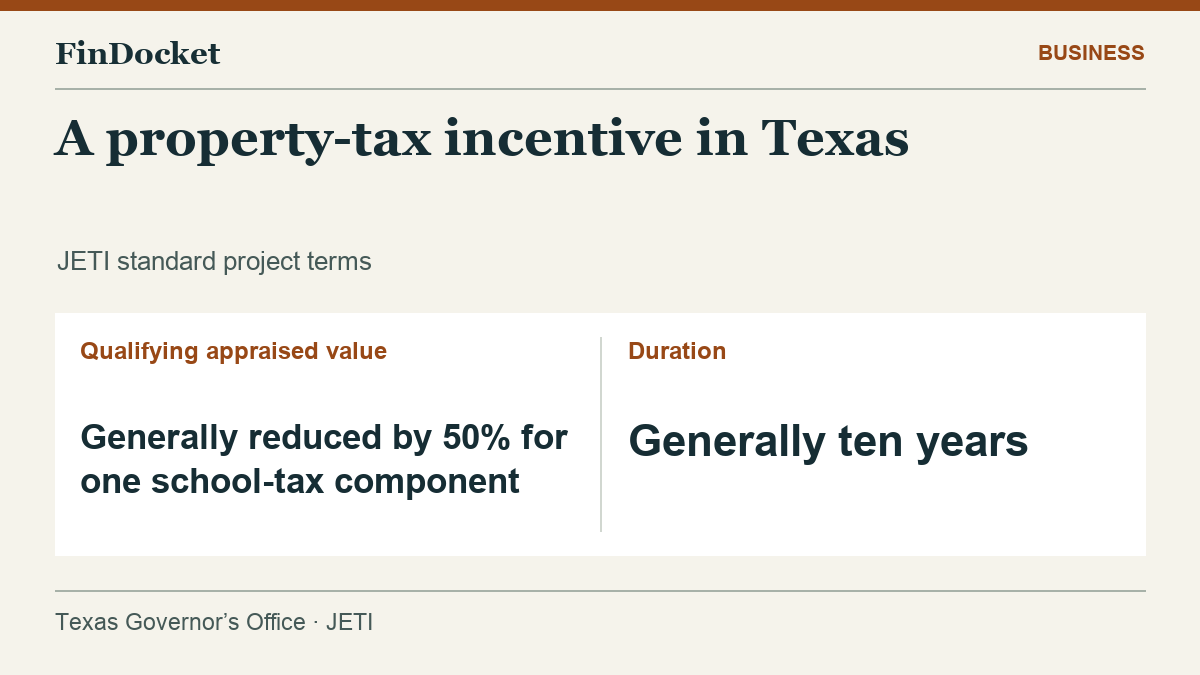
Texas’s Jobs, Energy, Technology and Innovation program generally permits a ten-year, 50% limitation on qualifying appraised value for school-district maintenance and operations taxes, subject to investment and job requirements. An additional limitation is possible in qualified opportunity zones. The ordinary percentage applies to a tax base. It is not a state contribution equal to half of construction cost.
How would the saving be calculated?
Suppose, for illustration, that qualifying appraised value in a particular year were $1 billion and the applicable tax rate were 1%. A 50% limitation would reduce the illustrative tax base by $500 million, producing $5 million of annual savings before other factors. Actual figures depend on appraisal, the relevant tax rate, eligibility, timing and the executed agreement.
The Texas Comptroller reviews applications, and approval is required from the governor and applicable school district. For a project valuation, follow those decisions, the company’s final site selection and actual tool or construction commitments. The announced investment scale is useful context. It cannot supply the missing inputs to the tax calculation.